

Blog
Best brake pads for Shimano Deore, XT and XTR: compatibility and performance guide

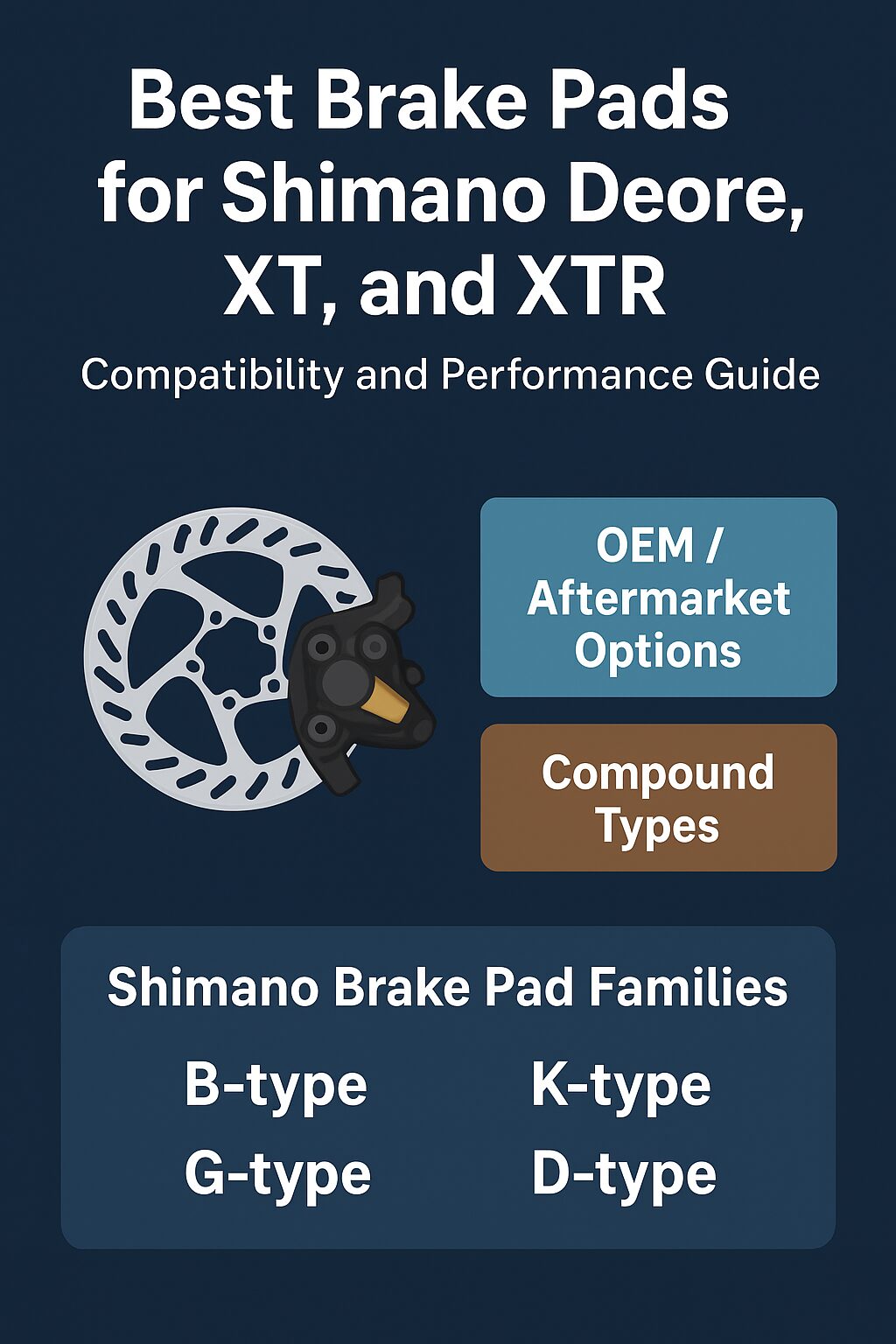
Shimano brakes dominate the mountain bike and gravel market, but choosing the right replacement brake pads can be confusing. With cryptic model numbers like B01S, K03Ti, G04S, and L04C, figuring out what fits your specific Shimano brake system feels like decoding a secret language.
This complete guide breaks down everything you need to know about Shimano brake pad compatibility, explains the differences between OEM and aftermarket options, and helps you choose the perfect brake pads for your Deore, XT, or XTR brake system based on your riding style.
Understanding Shimano brake pad families: the decoder ring
Shimano uses a letter-based system to categorize brake pads by physical size and mounting style. Here's what those letters actually mean:
The four main Shimano pad families
B-type pads (Post Mount, Wide Format)
- Used on: Entry-level to mid-range 2-piston brakes
- Common models: Deore, SLX, older XT systems
- Typical codes: B01S, B03S, B05S, E01S, M05
- Physical characteristics: Larger backing plate, post-mount calipers
- Compatible brakes: BR-M575, BR-M525, BR-M495, BR-M486, BR-M485, BR-M475, BR-M465, BR-M445, BR-M416, BR-M415, BR-M395, BR-M375, BR-M365, BR-M355, BR-M315, BR-MT500, BR-MT400, BR-MT200
G-type / J-type pads (Post Mount, Standard Format)
- Used on: Mid-range to high-end 2-piston and 4-piston brakes
- Common models: XT M8000/M8100, XTR M9000/M9100 (2-pot), SLX, Deore
- Typical codes: G04S, G04Ti, G03A, G03S, J04C, J03A
- Physical characteristics: Medium-length backing plate
- Compatible brakes: BR-M9000, BR-M9020, BR-M987, BR-M985, BR-M8100, BR-M8000, BR-M785, BR-M7100, BR-M7000, BR-M675, BR-M666, BR-M6000, BR-M615
K-type / L-type pads (Flat Mount, Compact Format)
- Used on: Road disc and gravel brake systems, newer MTB 2-piston
- Common models: Dura-Ace, Ultegra, 105, GRX, XTR M9100 (2-pot)
- Typical codes: K04Ti, K04S, K03Ti, K03S, L04C, L03A, K02S, K02Ti
- Physical characteristics: Shorter backing plate for flat-mount calipers
- Compatible brakes: BR-R9270, BR-R9170, BR-R8070, BR-R7070, BR-R4770, BR-RS805, BR-RS505, BR-RS405, BR-RS305, BR-U5000, BR-RX810, BR-RX400, XTR BR-M9100 (2-piston)
D-type / H-type / N-type pads (4-Piston, High-Performance Format)
- Used on: 4-piston high-performance MTB brakes
- Common models: XTR M9120/M9220, XT M8120/M8220, SLX M7120, Saint, Zee
- Typical codes: D02S, D03S, H03C, H03A, N04C, N03A
- Physical characteristics: Large backing plate for 4-piston calipers
- Compatible brakes: BR-M9220, BR-M9120, BR-M8220, BR-M8120, BR-M8020, BR-M820, BR-M810, BR-M640, BR-MT520, BR-MT420
CRITICAL COMPATIBILITY RULE: You cannot mix pad families. B-type pads won't fit in K-type calipers, G-type pads won't fit in D-type systems, etc. The backing plates are physically different sizes.
Shimano brake pad compound decoder: what those numbers and letters mean
Once you know your pad family (B, G, K, D, etc.), the second part of the code tells you the compound type:
Organic/Resin compounds (quieter, softer)
B01S, K03S, G03S, L03A, D03S, H03A, N03A
- Best for: Road riding, gravel, light trail riding, e-bike commuting
- Noise level: Quietest option, minimal squeal
- Power: Good modulation, softer initial bite
- Durability: 30-40% less lifespan than sintered
- Weather: Works well in dry conditions, loses power when wet
- Heat tolerance: Moderate, can fade on long descents
- Price: Usually $15-25 per pair (OEM)
Ideal use cases:
- Gravel bike riding in dry climates
- Road cycling with disc brakes
- Urban e-bike commuting
- Light XC mountain biking
- Riders who prioritize quiet operation
Sintered/Metallic compounds (powerful, long-lasting)
B05S, K04S, G04S, L04C, D02S, H03C, N04C
- Best for: Aggressive trail riding, enduro, DH, e-MTB, all-weather
- Noise level: More prone to squealing, especially when cold
- Power: Aggressive initial bite, maximum stopping power
- Durability: 50-70% longer lifespan than organic
- Weather: Consistent performance in wet/muddy conditions
- Heat tolerance: Excellent, maintains power on long descents
- Price: Usually $20-30 per pair (OEM)
Ideal use cases:
- Enduro and downhill mountain biking
- Heavy e-bikes (70+ lbs)
- All-weather riding
- Riders who descend frequently
- Bike park and lift-accessed terrain
Ice Technologies (finned pads for heat dissipation)
K04Ti, G04Ti, L04C (with fins), N04C, H03C
- What’s different: Aluminum cooling fins on backing plate
- Benefit: 20-30°C lower operating temperatures
- Trade-off: Slightly higher cost ($5-8 more per pair)
- Best for: Long descents, heavy braking, e-bikes
When Ice Tech pads make a real difference:
- Descents over 500+ vertical meters
- E-bikes over 60 lbs
- Bike park laps with consistent heavy braking
- Hot climates (desert riding, summer months)
Shimano brake system comparison: Deore vs XT vs XTR
Understanding the actual performance differences between Shimano brake tiers helps you decide if upgrading pads makes sense.
Shimano Deore (M6100 / M6120 series)
What you get:
- 2-piston (M6100) or 4-piston (M6120) options
- Tool-free reach adjustment (on M6100+, not on older models)
- Servo Wave technology for progressive power
- Compatible with B-type pads (older) or G-type/D-type pads (newer)
Real-world performance:
- Braking power: 85-90% of XT performance
- Weight: ~15-20g heavier per brake than XT
- Cost: $160-200 per set (F+R, new)
- Pad compatibility: G-type (2-pot) or D-type (4-pot)
Best use: Trail riding, all-mountain, e-bikes, budget builds
Key insight: Deore brakes perform remarkably similar to XT on the trail, with differences mainly appearing in weight and minor lever feel refinements. For most riders, Deore offers 95% of XT performance at 60% of the cost.
Shimano XT (M8100 / M8120 / M8220 series)
What you get:
- 2-piston (M8100) or 4-piston (M8120/M8220) options
- Tool-free reach and bite point adjustment
- I-SPEC EV mounting for clean cockpit integration
- Compatible with G-type (2-pot) or D-type (4-pot) pads
- Ice Technology rotor compatibility
Real-world performance:
- Braking power: 95-98% of XTR performance
- Weight: ~10-15g heavier per brake than XTR
- Cost: $300-420 per set (F+R, new)
- Pad compatibility: G04S/G03S or D02S/D03S
Best use: Aggressive trail, enduro, all-mountain, competitive XC
Key insight: XT brakes deliver nearly identical on-trail performance as XTR, with differences only becoming evident in lab testing. The XT is often the best value in Shimano’s lineup—premium performance without XTR’s weight-saving (and wallet-draining) materials.
Shimano XTR (M9100 / M9120 / M9220 series)
What you get:
- 2-piston (M9100) or 4-piston (M9120/M9220) options
- Lightest materials (titanium hardware, carbon lever blade)
- Low viscosity mineral oil for improved cold-weather performance
- Updated piston seals for better consistency
- Compatible with K-type (2-pot) or D-type (4-pot) pads
Real-world performance:
- Braking power: Top-tier (baseline for comparison)
- Weight: Lightest option (~588g per brake without rotor for 4-pot)
- Cost: $500-600+ per set (F+R, new)
- Pad compatibility: K04Ti/K03S (2-pot) or D02S/D03S/N04C (4-pot)
Best use: XC racing, weight-conscious builds, riders wanting absolute best
Key insight: XTR has softer engagement and longer lever throw compared to XT, providing more modulation, but this isn’t universally preferred. Some riders actually prefer XT’s snappier on/off feel.
The truth about performance differences
What actually changes as you move up the Shimano hierarchy:
- Braking power: Nearly identical across Deore, XT, XTR when using same pad compound
- Weight: This is where you pay for upgrades (20-30g savings per brake going XT→XTR)
- Lever feel: XTR has more modulation, XT/Deore more direct on/off feel
- Adjustability: All have reach adjust, only XT/XTR have tool-free bite point
- Ease of bleeding: Identical across all tiers
- Reliability: All three are extremely reliable when properly maintained
Bottom line: Deore, SLX, and XT feel pretty much exactly the same to most riders. Unless you’re racing XC or obsessed with weight savings, Deore or XT offer the best value.
OEM vs aftermarket brake pads for Shimano: the real cost-benefit analysis
Here’s where things get interesting. Shimano OEM pads work great, but they’re expensive. Aftermarket pads range from garbage to excellent.
Shimano OEM pad pricing (typical retail)
- B-type organic (B01S): $18-25 per pair
- B-type sintered (B05S): $22-28 per pair
- G-type organic (G03S): $20-28 per pair
- G-type sintered (G04S): $25-32 per pair
- G-type Ice Tech (G04Ti): $30-38 per pair
- K-type organic (K03S): $22-30 per pair
- K-type Ice Tech (K04Ti): $32-40 per pair
- D-type sintered (D02S): $28-35 per pair
- D-type finned (N04C): $35-45 per pair
Premium aftermarket alternatives (Hardheaded Ram, Galfer, EBC, Swiss Stop)
- Organic/Resin compound: $18-25 per pair
- Sintered compound: $24-32 per pair
- Ceramic compound: $28-36 per pair
- Sintered + copper fiber: $30-38 per pair
Cost savings over OEM: 10-30% depending on compound and brand
Material differences that actually matter
The secret to aftermarket pad performance isn’t just the friction compound—it’s the secondary materials used in construction.
Why cheap brake pads ($10-15 per pair) are a terrible deal:
- Use steel fiber instead of copper (5x worse thermal conductivity)
- No vibration dampening materials (Kevlar)
- Inconsistent compound mixing
- Shorter lifespan than advertised
- Often cause premature rotor wear
What premium aftermarket pads offer:
Copper fiber vs steel fiber (thermal management):
- Copper conducts heat away from the braking surface 5x faster
- Reduces risk of glazing and brake fade
- Especially important for e-bikes and long descents
- OEM Shimano uses steel fiber, premium aftermarket uses copper
Ceramic fiber (high-temperature stability):
- Maintains consistent friction at temperatures up to 600°C
- Reduces brake fade on sustained descents
- Better for heavy bikes and aggressive riding
Kevlar fiber (noise reduction):
- Absorbs vibrations that cause squealing
- This is THE anti-noise ingredient
- Budget pads don’t include it, which is why they squeal
Real-world testing insights: Premium aftermarket pads like Galfer show noticeably better power than Shimano Ice Tech semi-metallics once properly bedded in, though they may take longer to bed initially.
Choosing brake pads by riding discipline: what actually works
Forget generic recommendations—here’s what compound performs best for each riding style.
Cross-country (XC) racing and light trail
Best choice: Organic/Resin (G03S, K03S, D03S, H03A)
- Why: Lightest weight, excellent modulation for technical climbs
- Trade-off: Shorter lifespan, but XC riders don’t brake as much
- Upgrade option: Sintered if riding wet conditions or e-bike
When to upgrade to Ice Tech: Only if racing in hot climates or doing marathon XC events with sustained descents.
Trail and all-mountain riding
Best choice: Sintered (G04S, D02S) or Ceramic aftermarket
- Why: Balanced power, longer lifespan, works in all conditions
- Upgrade to finned: If descents exceed 300m vertical regularly
- Consider aftermarket: Premium ceramic compound offers best of both worlds
Pro tip: Many trail riders run sintered front, organic rear for best modulation.
Enduro and downhill
Best choice: Sintered with fins (G04Ti, N04C, D02S)
- Why: Maximum heat tolerance, consistent power under abuse
- No question: Always go Ice Tech/finned pads for DH
- Alternative: Premium aftermarket sintered with copper fiber
Critical factor: Ice Tech rotors and finned pads help reduce temperatures by 25°C compared to non-finned options, significantly reducing brake fade.
E-bikes (especially 60+ lbs systems)
Best choice: Sintered with copper fiber backing
- Why: Heavy bikes generate massive heat, need best thermal management
- Don’t skimp: E-bikes destroy cheap pads in weeks
- Upgrade consideration: Go 4-piston if currently on 2-piston
E-bike specific recommendations:
- Class 1/2 commuter (50-60 lbs): G04S or ceramic aftermarket
- Class 3 / moto-style (70+ lbs): D02S or premium sintered with copper
- Cargo e-bike: Always 4-piston with finned sintered pads
Gravel and road disc
Best choice: Organic (K03S, L03A)
- Why: Quiet, smooth modulation, adequate power for road riding
- Weather consideration: Sintered (K04S) if riding in wet frequently
- Ice Tech: Only if descending mountain passes regularly
Key insight: Road riders prioritize low noise and minimal rotor wear over maximum power. Organic compounds excel here.
Brake pad compatibility quick reference tables
2-piston Shimano MTB brakes
Brake Model | Pad Family | OEM Options | Aftermarket Compatible |
Deore M6100 | G-type | G03S, G04S, G04Ti | Yes (G-type) |
SLX M7100 | G-type | G03S, G04S, G04Ti | Yes (G-type) |
XT M8100 | G-type | G03S, G04S, G04Ti | Yes (G-type) |
XTR M9100 (2-pot) | K-type | K03S, K04S, K04Ti | Yes (K-type) |
Deore M615 (older) | B-type | B01S, B05S | Yes (B-type) |
XT M785 (older) | G-type | G03S, G04S, G02A | Yes (G-type) |
4-piston Shimano MTB brakes
Brake Model | Pad Family | OEM Options | Aftermarket Compatible |
Deore M6120 | D-type | D03S, D02S | Yes (D-type) |
SLX M7120 | D-type | D03S, D02S, N04C | Yes (D-type) |
XT M8120/M8220 | D-type | D03S, D02S, N04C | Yes (D-type) |
XTR M9120/M9220 | D-type | D03S, D02S, N04C, H03C | Yes (D-type) |
Saint M820 | D-type | D02S, N04C | Yes (D-type) |
Zee M640 | D-type | D02S, N04C | Yes (D-type) |
Road / Gravel Shimano brakes
Brake Model | Pad Family | OEM Options | Aftermarket Compatible |
Dura-Ace R9270 | K-type | K03S, K04S, K04Ti | Yes (K-type) |
Ultegra R8170 | K-type | K03S, K04S, K04Ti | Yes (K-type) |
105 R7170 | K-type | K03S, K04S | Yes (K-type) |
GRX RX810 | K-type | K03S, K04S, L03A, L04C | Yes (K-type) |
GRX RX400 | K-type | K03S, K04S | Yes (K-type) |
Tiagra 4770 | K-type | K03S, K04S | Yes (K-type) |
Common Shimano brake pad problems and solutions
Problem 1: New pads squealing immediately
Likely causes:
- Rotor contamination (oil, chain lube, fingerprints)
- Improper bed-in procedure
- Incompatible compound for your rotor type
Solution:
- Clean rotor with 90% isopropyl alcohol
- Perform proper 20-stop bed-in procedure (see our complete brake squeal guide)
- If persistent, try different compound (organic→sintered or vice versa)
Problem 2: Pads wearing unevenly (one side faster)
Likely causes:
- Caliper misalignment
- Sticky pistons not retracting evenly
- Rotor contamination on one side
Solution:
- Re-center caliper using squeeze-and-hold method
- Clean and lubricate caliper pistons
- Inspect rotor for contamination or warping
Problem 3: Soft lever feel or wandering bite point
Likely causes:
- Air in hydraulic system
- Contaminated brake fluid
- Free stroke adjuster issue (common on XT M8100/XTR M9100)
Solution: Bleed with lever fully extended and freestroke screw wound all the way out to create extra volume and flush trapped air pockets. This procedure specifically addresses Shimano’s common air-trapping issues.
Problem 4: Rapid pad wear (lasting <500 miles)
Likely causes:
- Dragging brake (piston not retracting)
- Contaminated pads
- Wrong compound for riding style (organic on e-bike)
- Rotor glazed causing extra friction
Solution:
- Check that pistons retract fully after brake release
- Replace pads if contaminated (can’t be saved)
- Upgrade to sintered compound if wearing too fast
- Sand rotor with 120-grit if glazed
Problem 5: Brake fade on long descents
Likely causes:
- Pad compound overheating (organic pads)
- Inadequate heat dissipation (no Ice Tech)
- 2-piston system undersized for bike/rider weight
Solution:
- Immediate: Upgrade to sintered pads with fins
- Long-term: Consider larger rotors (160→180, 180→200mm)
- Best solution: Upgrade to 4-piston system if frequently experiencing fade
Proper brake pad installation for Shimano systems
Getting installation right is critical for noise-free, powerful braking.
Essential tools needed
- 3mm or 4mm hex key (depends on caliper)
- Tire lever or pad spreader tool
- Isopropyl alcohol (90%+)
- Clean rag
- Optional: Nitrile gloves (prevent contamination)
Step-by-step installation process
- Preparation (CRITICAL)
- Clean rotor thoroughly with isopropyl alcohol
- DO NOT touch rotor or pad friction surface with fingers
- Wear gloves or handle pads by backing plate only
- Remove old pads
- For G-type/D-type: Remove retaining bolt or cotter pin
- Push pistons fully back into caliper
- Slide old pads out, noting orientation
- Inspect before installing new pads
- Check pistons move freely and retract evenly
- Look for brake fluid leaks around piston seals
- Verify rotor isn’t warped (spin wheel and watch gap)
- Install new pads
- Insert spring clip first (if separate)
- Slide pads into caliper, matching orientation of old pads
- Install retaining bolt/pin and torque to spec (typically 4-6 Nm)
- Initial spin test
- Before bed-in, wheel should spin freely with no rubbing
- If rubbing, re-center caliper
- If persistent, check for rotor warp
- Bed-in procedure (MANDATORY) See our complete brake bed-in guide for the exact 20-stop procedure.
Critical mistakes to avoid:
- ❌ Touching rotor or pads with greasy fingers
- ❌ Skipping the bed-in process
- ❌ Not fully retracting pistons before installation
- ❌ Mixing different compounds front and rear (can cause imbalance)
- ❌ Over-torquing the retaining bolt (strips threads)
When to replace Shimano brake pads: wear indicators explained
Knowing when pads are worn out prevents rotor damage and brake failure.
Visual inspection method
Minimum safe pad thickness: 0.5mm friction material
How to check:
- Remove wheel and look at pads through caliper
- Most Shimano pads have 1.5-2.0mm material when new
- Replace when less than 1mm friction material remains
- URGENT replacement if backing plate is visible or close to rotor
Signs of critical wear:
- Squealing or grinding noise (metal-on-metal)
- Grooves worn into rotor surface
- Significantly reduced braking power
- Brake lever pulls further than normal
Mileage-based guidelines
These are rough estimates—actual wear depends heavily on riding style and terrain:
Organic pads (G03S, K03S, D03S):
- Road/gravel: 2,000-3,000 miles
- XC trail: 1,000-1,500 miles
- E-bike commuting: 800-1,200 miles
- Enduro/DH: 500-800 miles
Sintered pads (G04S, K04S, D02S):
- Road/gravel: 3,000-4,500 miles
- XC trail: 1,500-2,500 miles
- E-bike commuting: 1,200-2,000 miles
- Enduro/DH: 800-1,500 miles
Factors that accelerate wear:
- Heavy braking style (dragging brakes vs pulsing)
- Wet/muddy conditions (2x faster wear)
- Heavy rider or bike weight
- Steep terrain (more descending)
- Glazed rotors (friction material wears faster)
Upgrading from OEM: when aftermarket makes sense
Not all aftermarket pads are created equal. Here’s when upgrading is worth it.
Scenarios where aftermarket DEFINITELY makes sense
- E-bike riders needing better heat management
- OEM Shimano pads use steel fiber backing
- Premium aftermarket with copper fiber dissipates heat 5x better
- Worth the $10-15 extra per set for heavy e-bikes
- Riders experiencing chronic brake squeal
- Aftermarket pads with Kevlar dampening reduce noise
- Often solve squealing that OEM pads can’t fix
- Especially valuable for early-morning rides (neighbors will thank you)
- Budget-conscious riders buying multiple sets
- If you’re changing pads 3-4x per year, 20% savings add up
- Quality aftermarket like Hardheaded Ram offers OEM performance at lower cost
- Annual savings: $40-60 for frequent riders
- Riders wanting ceramic compound (not available OEM)
- Shimano doesn’t offer true ceramic compound
- Aftermarket ceramic offers best of organic + sintered
- Quieter than sintered, longer-lasting than organic
- Ideal for e-bikes and all-mountain riding
Scenarios where OEM might be better
- Warranty considerations
- If bike is under warranty, some manufacturers require OEM parts
- Check warranty terms before switching to aftermarket
- Racing or competitive riding
- Consistency matters more than cost savings
- Stick with what you know works
- Road/gravel riders prioritizing rotor lifespan
- Shimano organic pads are intentionally soft to protect rotors
- Some aftermarket compounds are harder (longer pad life, but faster rotor wear)
Maintenance tips for maximum Shimano brake pad lifespan
Get more miles from your pads with these proven maintenance practices.
Monthly maintenance routine (5 minutes)
- Visual pad inspection
- Look through caliper opening, check thickness
- Note any uneven wear patterns
- Rotor cleaning
- Wipe down rotors with isopropyl alcohol
- Removes chain lube overspray and road grime
- Prevents premature pad contamination
- Caliper alignment check
- Spin wheel and listen for rubbing
- Re-center if needed (takes 2 minutes)
Every 3 months (15 minutes)
- Deep rotor cleaning
- Remove wheel, clean both sides thoroughly
- Inspect for wear grooves or hot spots
- Piston inspection
- Remove pads temporarily
- Push pistons out slightly, clean with isopropyl alcohol
- Check piston seals for leaks
- Apply tiny amount of brake fluid to piston perimeter before retracting
- Brake fluid check
- Look at reservoir (usually under rubber cap on lever)
- Fluid should be clear, not brown/cloudy
- If discolored, schedule full brake bleed
Annually or every 2,000 miles
- Complete brake bleed
- Fresh fluid prevents spongy lever and internal corrosion
- Especially important if riding in wet conditions
- Rotor replacement consideration
- Shimano rotors should be replaced at 1.5mm thickness
- Use digital caliper to measure (new rotors are 1.8-2.0mm)
Tips that dramatically extend pad life
Brake dragging is the enemy:
- Pulsing brakes (squeeze-release-squeeze) uses 50% less pad material than dragging
- On long descents, do 5-second hard brakes instead of constant light pressure
Clean your bike away from brakes:
- When washing, cover disc brakes with plastic bags
- Chain lube overspray is a major pad killer
Bed-in every time:
- Even when re-using old pads after wheel removal
- 5-10 moderate stops refreshes the transfer layer
Regional considerations: brake pad choice for different climates
Where you ride significantly impacts which compound performs best.
Dry, dusty climates (Southwest US, Southern California, Australia)
Best choice: Sintered pads
- Why: Dust acts as an abrasive, organic pads wear extremely fast
- Sintered compounds resist dust contamination better
- Trade-off: More noise, but worth it for 2x lifespan
Additional recommendation:
- Clean rotors every ride (2-minute job)
- Consider larger rotors to spread heat over bigger surface
Local insight: In hot, dusty conditions like Southern California mountain biking, Ice Tech cooling significantly reduces brake fade.
Wet, muddy climates (Pacific Northwest, UK, Northern Europe)
Best choice: Sintered with copper backing
- Why: Organic pads lose power immediately when wet
- Sintered maintains 90%+ power in rain
- Copper backing prevents water-induced thermal shock
Maintenance critical:
- Pads wear 2-3x faster in wet conditions
- Inspect pads after every wet ride
- Replace more frequently (by mileage) than dry-climate riders
Cold climates (winter riding, high altitude)
Best choice: Organic for moderate cold, sintered for extreme
- Organic pads work well in cold (unlike car brakes)
- Sintered may squeal more in very cold temperatures
- XTR’s low-viscosity mineral oil helps in cold (available M9100+ systems)
Cold weather tip:
- First 2-3 brake applications may feel wooden in sub-freezing temps
- This is normal—pads warm up quickly with use
Hot, humid climates (Southeast US, tropical regions)
Best choice: Sintered with Ice Tech fins
- Why: Heat + humidity = maximum thermal stress
- Finned pads essential for proper cooling
- Consider upgrading rotor size if experiencing fade
Final recommendations: what to buy for your specific Shimano setup
Here’s the bottom line for each common Shimano brake system.
If you have: Shimano Deore M6100 (2-piston)
Best OEM option: G04S (sintered) for versatility Best aftermarket: Hardheaded Ram G-type sintered with copper fiber Upgrade path: If needing more power, move to M6120 4-piston (same pads, more pistons)
If you have: Shimano XT M8100 (2-piston)
Best OEM option: G04Ti (sintered with fins) for trail/all-mountain
Table of Contents
Toggle